USDS report “lashes” local elections
24/05/2012 00:00



The US State Department published the report for the human rights through the world.
The US State Department, Hillary Clinton, together with the Secretary Assistant for Democracy and Human Rights, Michael Posner, referred to a detailed analysis of the 2011 developments.
Clinton spoke about the endless changes that took place in 2011.
“Our report is based on the only truth that is found in the heart of the Universal Human Rights Declaration, which states that sll human beings are born free and equal in dignity and rights”.
In the chapter for Albania, the report refers to the most important events. Based on january 21st, in the part called Arbitrary or Unlawful Deprivation of Life, it says:
“On January 21, Republican Guards shot at protestors during a violent opposition demonstration at the Prime Ministry. Four protestors were killed during the demonstration. The prosecutor general opened an investigation into the killings. The investigation proceeded slowly. As of year’s end, no Republican Guards or government officials had been indicted for their roles in the shooting deaths.”
At the part that refers to the Status of Freedom of Speech and Press, the report mentions January 21st again, when “police personnel beat journalist Ened Janina, political editor of the daily newspaper Shekulli, while he was covering a political demonstration in Tirana. According to Janina, a prosecutor initiated an investigation and received Janina’s testimony shortly after the protest, but he was never summoned again to testify.
The same day, reporter Fatos Mahmutaj was grazed by a bullet that killed a man standing on the media riser. Mahmutaj claimed on several television shows that the bullet wounding him and killing another man came from Republican Guard soldiers.
Mahmutaj reportedly received several death threats after his public statements and left the country days after the protest. In the spring, Mahmutaj was granted political asylum in Belgium.
Reporter Artan Hoxha aired footage of the January 21 protest that allegedly showed how one of the protestors died. Hoxha stated that four days after the broadcast, unknown men handed his 10-year-old son at home an envelope that contained three bullets.
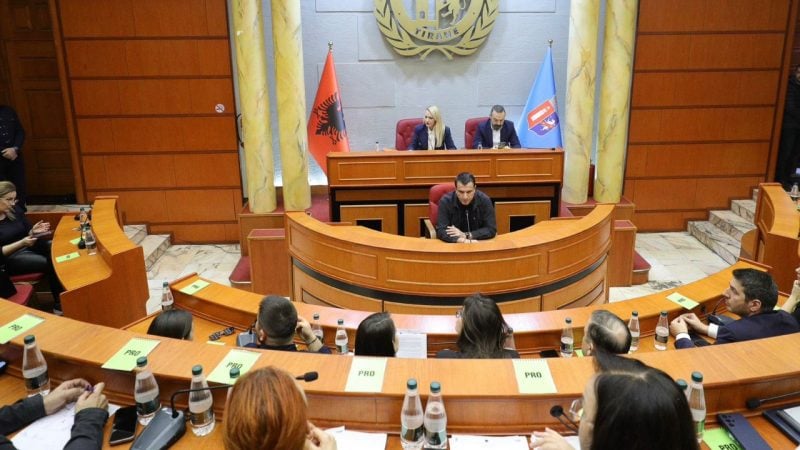
As regards the May 8th local elections, the report is based on the Organization for Security and Cooperation in Europe (OSCE), which characterized the elections as competitive and transparent, but nevertheless highly polarized, due to mistrust between political parties in government and in the opposition.
According to the report, the Central Election Commission’s (CEC) decision to overturn initial results in the mayoral contest in Tirana was widely perceived to be partisan and undermined confidence in its independence and impartiality.
At section 4, for Official Corruption and Government Transparency, the report underlines that “the law provides criminal penalties for official corruption; however, the government did not implement the law effectively, and officials frequently engaged in corrupt practices with impunity”.
The report notes that “corruption in the executive branch was widespread and pervasive. The education system remained corrupt, and officials sometimes required bribes from students for them to matriculate or pass examinations. Doctors and other medical personnel frequently demanded payment to provide what should have been free government services.
As in other sectors, high-profile defendants usually were found not guilty, even in the face of overwhelming evidence. While numerous low and mid-level officials were prosecuted and often convicted for corruption, prosecuting higher level officials remained problematic”.
The report says that “broad immunity provisions for judges, members of parliament, and other high-level officials prohibit not only prosecution but any use of investigative measures, hindering the government’s ability to prosecute high-level corruption”.
Police beating and other mistreatment of suspects during detention and interrogation, sometimes to elicit confessions, were also significant problems. The report also refers to other human rights problems included some cases of physical mistreatment in police detention centers, domestic violence and discrimination against women, child abuse, and discrimination on the basis of ethnic minority status and sexual orientation and gender identity.
Top Channel