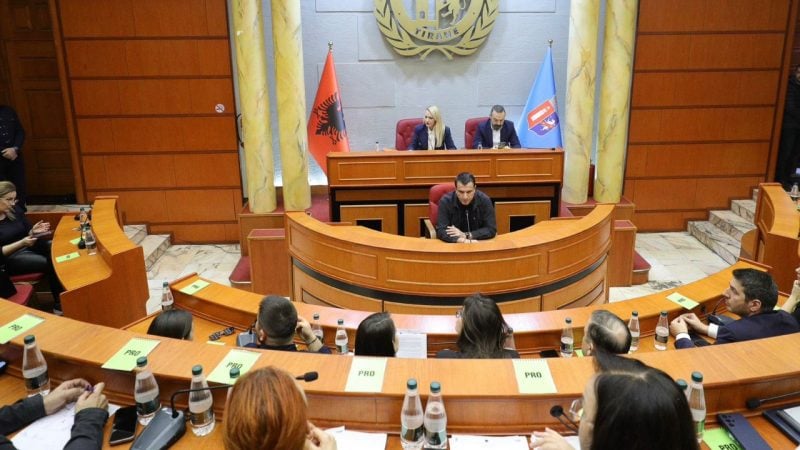
Reform, Westminster assists Albanians
09/04/2012 00:00



The Westminster Foundation for Democracy in London is assisting the
Commission of the Parliamentary Reform through an expert who has
commented the propositions given by the opposition for the Parliament
Regulation reform.
Diplomatic sources in Tirana secured for Top Channel a document through which the British expert for Parliamentary issues, Dr. Phil Larkin, has compared the opposition’s amends with what the European parliament requests in the Progress Reports.
The propositions of the opposition members at the Electoral Commission Reform are related with the hidden vote, the voting of judges, the 60 minutes time frame for a speech and the time that the opposition should have during the Parliamentary debates for the presented draft laws.
The Ministers’ right to speech when presenting draft laws, and the Prime Minister’s right to speak as much as he wants, as sanctioned by the Constitution, is seen by the British expert as something strange and as an anomaly for the Albanian Parliament, which would not help the functionality of any Parliament.
As for the amends about the Ministers’ intervention for no more than 10 minutes, about issues of the agenda, and that the opposition leader has the right to comment the Prime Minister’s speech, the recommendations says that:
“if the Prime Minister’s unlimited right to speech cannot be changed at the Constitution, the Regulation should be amended for allowing the opposition to respond. In long terms, these Constitutional and Regulation definitions must be modified for allowing more conditions in this kind of power”.
According to the British expert, Phil Larkin, “the open vote for appointing high rank public officials is an important mechanism of accountability”.
As for Albania, he says that the decision should be decided according to the local reality.
We must underline that it is difficult to give a suggestion a priori for this issue. The idea that a hidden vote is more effective for leaving politics far from new appointments is made on the fact that the Parliament is dominated by two big parties with a very high discipline level upon their members.
Referring to the fact that the regulation has examples when the Parliament votes with qualified majority for the appointment of public officials, he considers as abnormal that the appointment of high rank judges can be made with simple voting.
The expert suggests that if the qualified majority vote is thought as the necessary decision for some appointments, then it should be expanded for the appointments of the Supreme and Constitutional Court. The recommendation says that the appointments at the Supreme and Constitutional Courts should be made through hidden votes and qualified majority.
Top Channel